If you stop and think about it, we live our lives almost entirely through our eyes and ears. From morning screen-time to evening podcasts, our modern world demands constant visual and auditory attention.
But there is an ancient, deeply instinctual sense that we often neglect, one that holds a direct key to our nervous system.
Our sense of smell.

With our highly anticipated Sleep Better Workshop with Aromatherapy coming up on Saturday, 13th June, we wanted to explore the beautiful science of how awakening our olfactory sense can completely transform our meditation, mindfulness and sleep practices.
The Direct Path to the Brain: Why Smell Shifts Us Instantly
To understand why aromatherapy is so powerful, we look at neurobiology. When you inhale an aroma, the volatile molecules of the essential oil travel up your nose and interact with the olfactory system, which is directly connected to the limbic system.
The limbic system is the ancient, primitive part of the brain responsible for our emotions, memories, and instinctual stress responses. It is the only sense that bypasses the “thinking” part of our brain (the thalamus) and goes straight to our emotional motherboard.
This is why a simple scent can instantly transport you back to a childhood kitchen or a forgotten summer holiday. In meditation, this direct pathway means we don’t have to “try” to think calm thoughts, a specific aroma can physically trigger the relaxation response before our conscious mind even realises what’s happening.
What the Science Says: Cortisol, Brainwaves and the Amygdala
While aromatherapy can feel mystical, its effects are grounded in clinical research:
- The Cortisol Drop: A clinical study showed that inhaling Lavender essential oil significantly reduced serum levels of cortisol – the primary stress hormone that keeps us “tired-but-wired” at night.
- Autonomic Balance: Research conducted with highly stressed teachers found that inhaling Bergamot for just 10 minutes weekly led to a significant reduction in both blood pressure and heart rate, gently nudging the nervous system back into a balanced, parasympathetic state.
- Shrinking the Worry Center: Harvard neuroscientist Sara Lazar’s research has shown that consistent meditation actually shrinks the amygdala (the brain’s fear and anxiety hub). When we combine meditation with essential oils, we are utilising a dual-action approach to lower the body’s physiological “alarm system.”

Creating Your “Scented Sanctuary”
Imagine this: you’ve created the perfect meditation space. The walls are a restful light blue, the music is soft and dreamy, and you’ve picked out just the right cushion to sit on. What’s missing? A carefully selected fragrance to soothe and relax body, mind and soul.
There’s nothing quite like meditation to strengthen the connection between body and mind. Focused breathing, being aware of how your body feels and clearing your head from distraction: all of these things engage the senses and help you be present in the moment. But the little-known secret to a perfect meditation session comes from engaging your fifth sense: smell.
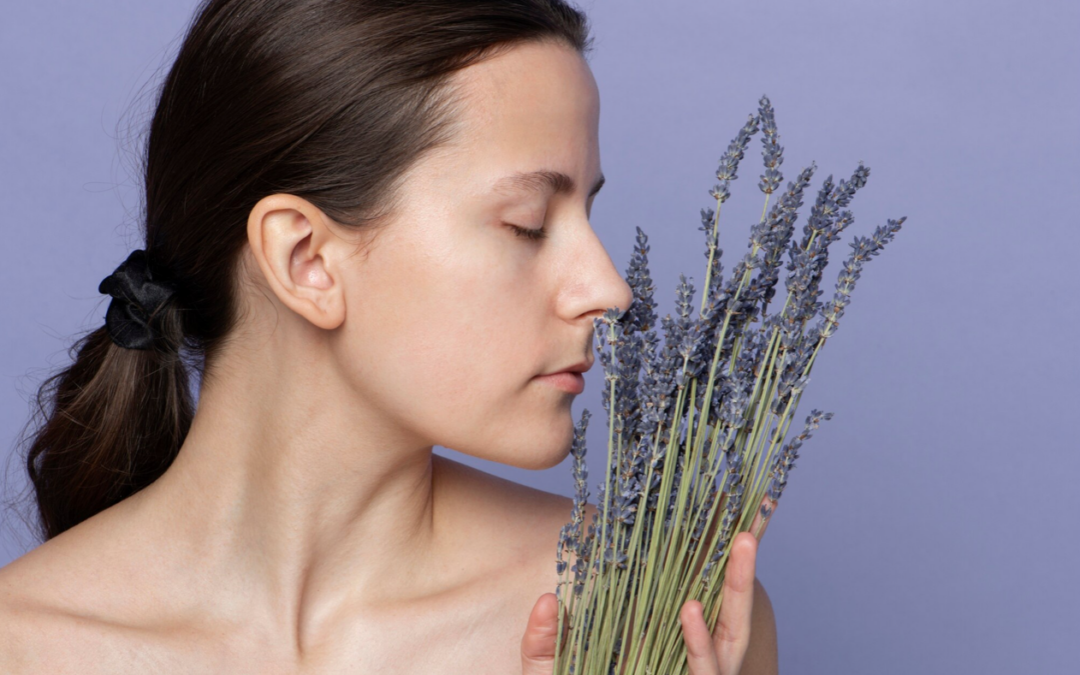
Scientists have found that certain scents, such as jasmine, yuzu, and clary sage can direct the body to relax, working to lower your heart rate in as little as ten minutes. Lavender is perhaps the most celebrated calming scent: studies show that it can help combat mild insomnia, reduce anxiety, and even ease depression in certain cases. It will come as no surprise, then, that engaging your sense of smell through aromatherapy can also make your meditation practice even more effective.
If oil isn’t your thing, scented candles can be a great alternative. Throughout history, this has been a way for people to signify a sense of peace. There’s a certain ceremony in the act of lighting a candle and watching the flame. As you focus on your breath, you are also soaking in a relaxing scent, a signal to your smell receptors to calm down. Inhaling peace and exhaling negativity is an important aspect of meditation, after all.

Tailoring Your Oils: Match Your Scent to Your Intention
Just as we choose different meditation styles depending on how our day has gone, we can select and tailor our essential oils to support what our mind needs in the moment.
- For Grounding & Calming (The Restless Mind): If your brain feels scattered, seek earthy, deep aromas like Sandalwood, Vetiver, and Clary Sage. These oils quiet the mind’s “background noise,” soothe anxiety and settle a racing heart.
- For Focus & Clarity (The Brain-Foggy Mind): If you are sitting down to read, journal, or need to anchor your drifting thoughts during meditation, try Rosemary, Peppermint, and Lemon. Rosemary, in particular, has been used for centuries to aid memory and deep cognitive concentration.
- For Uplifting the Spirit (The Heavy Mind): If you are feeling emotionally depleted, bright citrus oils like Bergamot, Sweet Orange and Grapefruit stimulate the limbic system to trigger a release of feel-good endorphins, bringing a gentle sense of warmth and positivity.

Practical Rituals: How to Use Scent in Your Meditation
To bring this practice alive at home, try these three simple physical rituals before your next quiet session:
- The Palmar Inhalation: Place a single drop of diluted essential oil (like Lavender or Frankincense) onto your palms. Rub your hands together to warm the oil, cup them over your nose and mouth (leaving space to breathe comfortably), and take three slow, deep abdominal breaths before you begin your practice.
- Misting Your Nest: Before you lie down on your yoga mat or sit on your meditation cushion, spray a gentle room mist above you. Let the micro-droplets settle over your space, creating a physical cloud of calm.
- The Pulse-Point Anchor: Apply a rollerball blend to your wrists or behind your ears. As your body temperature warms the skin during your meditation, the scent will gently release, acting as a constant, subtle reminder to return to the present moment whenever your mind wanders.
Unlock the Power of Scent
If you are ready to learn how to actively blend these two powerful modalities for a profound night’s sleep, we would love to welcome you to our next specialised workshop with Clinical Aromatherapist, Shelley Baker. If you would like to know more about Aromatherapy in general, we highly recommend getting in touch with Shelley
https://aromatictherapy.co.uk/

Recent Comments