In our modern world, we are constantly bathed in noise. From the low hum of traffic and the persistent ping of phone notifications to the internal chatter of our own busy minds, our brains are working overtime just to filter out the static.
It can leave us feeling overstimulated, mentally fatigued and physically tense.
But what if the antidote to modern noise isn’t total silence, but rather a different kind of sound?
With our summer of outdoor sound bath sessions, we wanted to take a moment to pull back the curtain on the science of sound therapy again. Beyond the beautiful, tranquil atmosphere of a sound bath, there is a fascinating physiological reason why resonant gongs, crystal & brass bowls, and chimes can so quickly transport your body and mind into deep, healing recovery.

Brainwave Entrainment: Stepping Down from High Alert
To understand how sound therapy calms an overactive mind, we look at a biological phenomenon called entrainment.
Our brains are essentially electrical organs. When we are rushing through our day, managing family logistics, or responding to emails, our brainwaves operate in a high-frequency Beta state (typically between 12Hz and 30Hz. This state is essential for concentration, but staying here too long leads to anxiety and fatigue.
When you lie down in a sound bath, your brain naturally begins to synchronize its own electrical pulses with the slow, rhythmic, low-frequency sound waves of the instruments.
This process gently coaxes your brainwaves down into:
- Alpha waves (8-12Hz): The gateway to calm, light relaxation.
- Theta waves (4-8Hz): The deeply meditative state where our most profound physical healing, emotional processing, and creative insights occur.
In a sound bath, you aren’t fighting your thoughts or trying to force yourself to “clear your head.” The sound is doing the heavy lifting for you, physically slowing your brainwaves down to a state of restorative rest.

The Physical Ripple: Tactile Vibration at a Cellular Level
We often think of hearing as something we do solely with our ears, but our skin and bones are also incredibly sensitive sound receptors.
The human body is made up of approximately 60% water. Because sound waves travel through water roughly four times faster than they travel through the air, your body acts as a perfect natural conductor for vibrational medicine.
When a singing bowl is struck close to you, those low-frequency vibrations physically ripple through your muscles, tissues, and organs.
- Relieving Physical Tension: Clinical research shows that this gentle, cellular massage helps to alleviate chronic tension headaches, soothe joint discomfort, and relax tight muscle fibres.
- Activating the “Braking System”: This deep vibrational input stimulates your mechanoreceptors (the nerve endings in your skin that detect pressure and vibration). This sends a direct, physical signal up to your brain to activate your parasympathetic nervous system—the biological brake pedal that lowers your heart rate and halts the production of cortisol.

Turning Down the “Worry Center”: Shifting Your Sensory Focus
If you struggle with meditation because you struggle to sit still or have a busy, looping mind, a sound bath is a beautiful alternative.
Anxiety and overthinking thrive when our brain’s Default Mode Network (DMN) is highly active. This is the network responsible for mind-wandering, worrying about the future, and ruminating on the past.
To quiet the DMN, we have to gently anchor our brain in the present sensory moment. Because the rich, complex, and unpredictable tones of crystal singing bowls are so captivating, they capture your mind’s spotlight of attention.
Instead of tracking your internal worry loops, your brain shifts entirely into sensory processing. You become completely immersed in the rise and fall of the frequencies. Before you know it, the continuous stream of overthinking simply fades away, leaving a spacious sense of mental clarity.
What the Research Says: Anxiety, Sleep & Recovery
While sound therapy has roots in ancient traditions; from Pythagoras using specific musical intervals to heal the nervous system, to the rhythmic, grounding medicine of drumming across global cultures, modern clinical science is finally catching up.
Recent clinical studies have shown that consistent sound therapy can:
- Reduce Subjective Stress: Participants report significant drops in feelings of anxiety, tension, and low mood after even a single 30-minute session.
- Improve Sleep Architecture: By calming an overactive nervous system before bed, sound baths promote a textbook transition into deep, restorative REM sleep, helping to combat mild insomnia.
- Improve Heart Rate Variability (HRV): A higher HRV is a key indicator of a robust, resilient nervous system that can easily bounce back from daily stress.

Sound Therapy: Finding Calm at Home
You do not need a professional setup or an organised workshop to begin inviting the therapeutic power of sound into your everyday routine. Sound therapy is beautifully diverse, encompassing a wide range of simple, daily practices that help us regulate our emotions and find a pocket of calm amidst life’s pressures.
Here are five accessible ways to explore sound healing on your own terms, right at home:
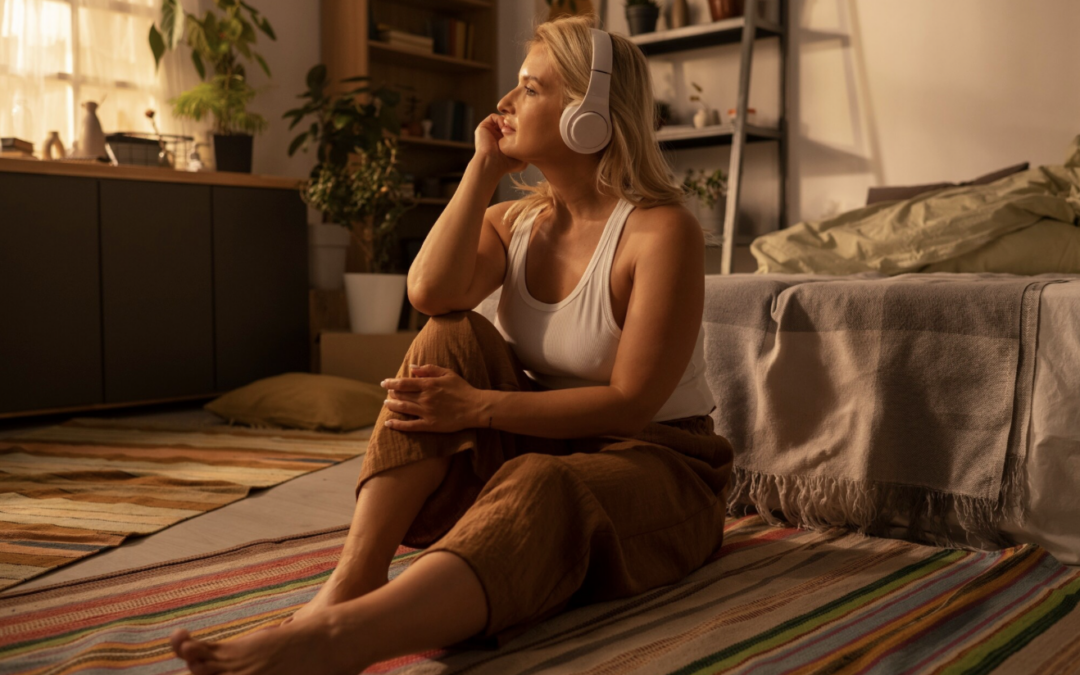
- Mindful Listening to Music: Listening to music is a highly effective, widely recognised tool for mental health. Different melodies and rhythms can evoke deep tranquility, soothe anxiety, and lift our spirits. Studies show that music actually activates brain regions involved with feelings of reward, empathy, and emotional resilience. Try setting aside just ten minutes to listen to a favorite calming track with headphones, making it a dedicated, single-focus meditation.
- Repetitive Drumming: Drumming is one of the oldest, most ancient forms of sound therapy. The repetitive, steady beats have a profound, grounding effect that naturally calms an overactive nervous system. Simply tapping a slow, rhythmic pulse on your lap can act as an instant physical anchor, calming anxiety or offering a gentle boost to your energy when you feel depleted.
- Creative Expression with Instruments: Playing an instrument, whether it’s dusting off an old piano, strumming a guitar, or simply experimenting with a simple flute, is a wonderful creative outlet. The act of creating music clears our thinking and improves our attention spans, building a deep cognitive confidence that helps us face daily challenges with a lighter mind.
- Singing to Stimulate Your System: Your own vocal cords are the most powerful vibrational healing instrument you possess. Singing is a built-in way to express emotions, lift your spirits, and stimulate the vagus nerve (the main highway of your parasympathetic nervous system). Singing, humming, or chanting regularly can naturally trigger a biological wave of ease and foster deeper empathy and communication with those around us.
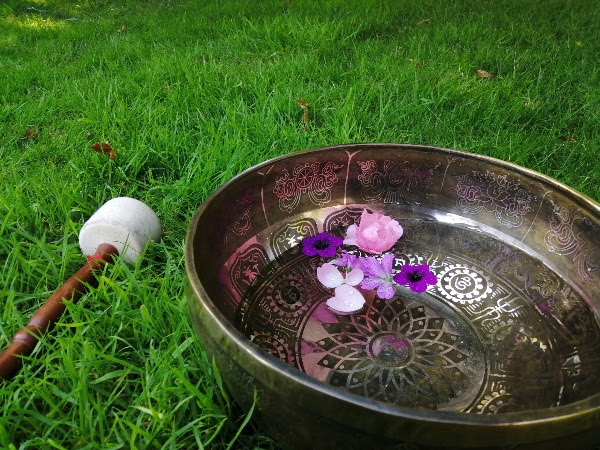
- Incorporating Singing Bowls: Singing bowls, whether crafted from metal or crystal, produce pure, resonant tones that clear a foggy mind and ease tension. Bringing a singing bowl into your home routine is simple: try striking a bowl at the beginning of your quiet time and focusing entirely on the sound as it slowly decays into silence. It is a beautiful way to relieve headaches and deepen your daily concentration.

Recent Comments